The Community Schemes Ombud Service (CSOS) is a public entity that exists to resolve community scheme disputes. It is established by the Community Schemes Ombud Service Act. To fund this service, community schemes pay a levy to CSOS based on the levies that they charge to their members. In system terms, this would be most 'L'evy type properties. CSOS is a VAT exempt organisation, so the CSOS levy will never include VAT.
• |
This facility assists in controlling the process of raising the CSOS levy from scheme members, and paying it to CSOS. |
• |
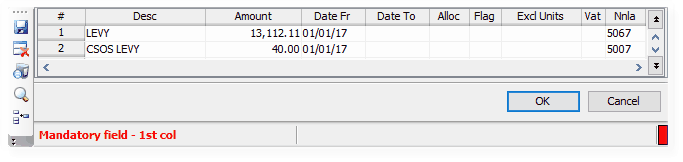
In essence, a CSOS levy will be calculated and charged to a unit (debtor), and accrued as payable to CSOS. A scheme could decide to pay the CSOS levy out of it's levy fund, and not charge its members, or block the raising or accruing of the CSOS levy. These options are accommodated as described below. |
• |
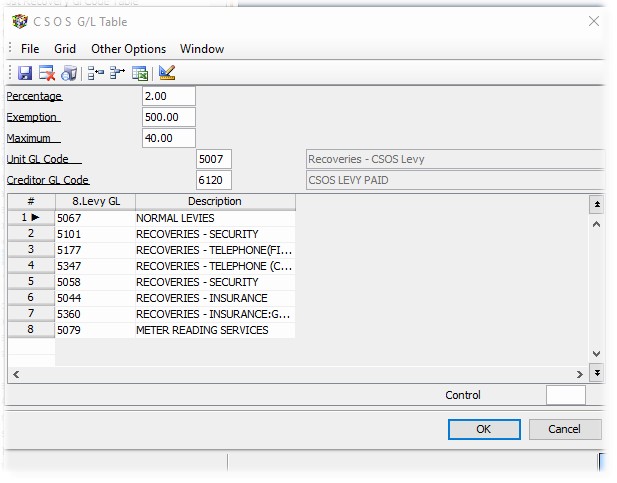
The main CSOS levy raise will analyse each unit's monthly fee structure, selecting and accumulating the total of all included Levy GL code amounts. deducting the exemption amount and applying the Percentage up to the Maximum amount, and then charge and accrue that amount for each relevant unit. |
The process and utilities cover three main areas:

|




|




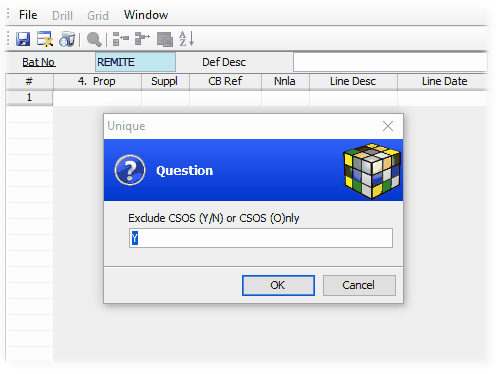
Having created your CSOS creditor using CSOS in the creditor description, and linking the properties to the creditor as described in setup above (Agent control flags), when you run REMITE or REMITC as usual when selecting creditors for payment, you will be asked to Exclude CSOS or only select CSOS creditors. Remember that the selection is based on the CSOS being in the creditor name:
This normal creditors process will then create a creditors batch for payment as is usual when paying creditors from the system. |